

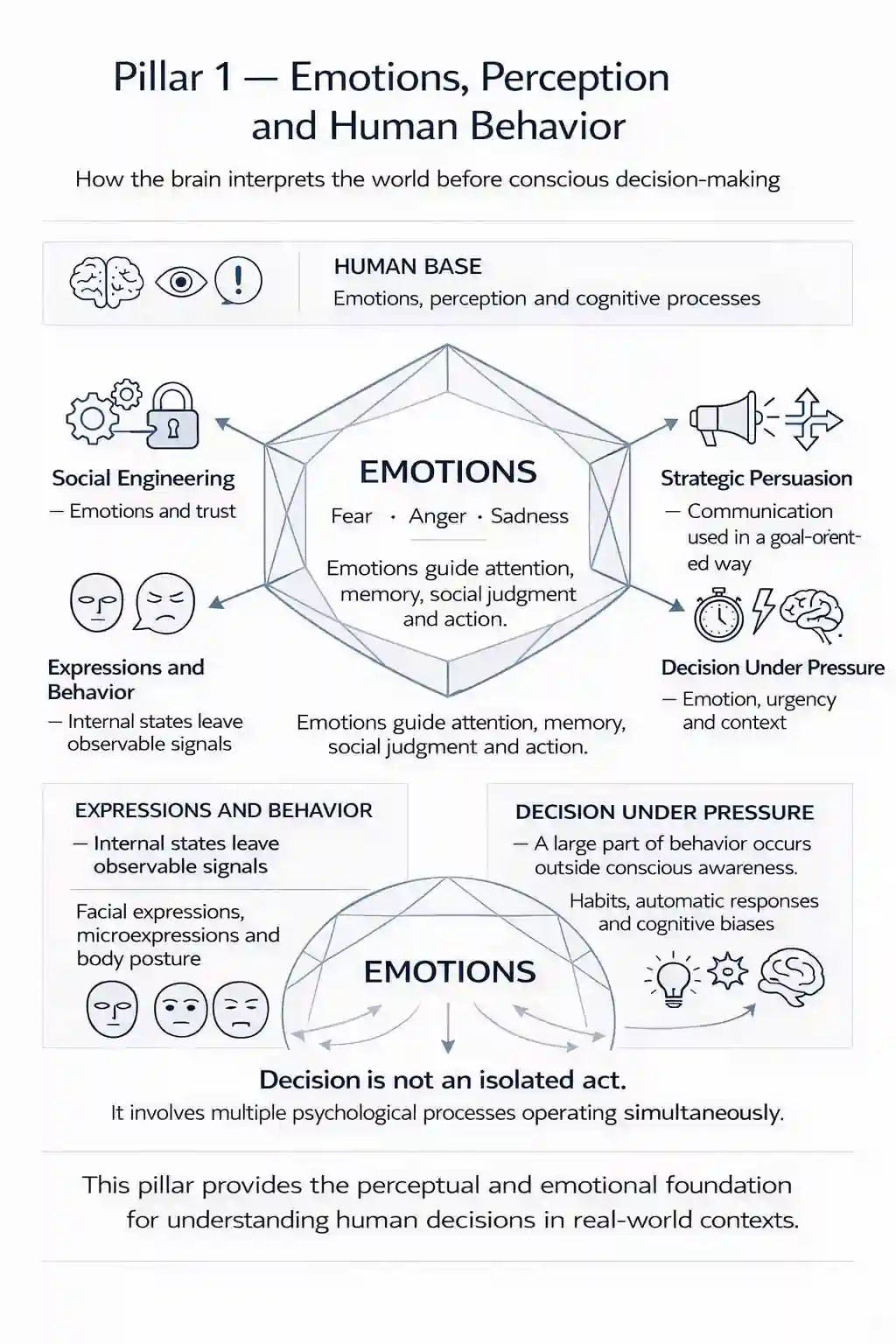
Methodological Foundation of Empirical Legislative Science
Legislative science is not limited to the systematic interpretation of normative texts. It involves structured empirical investigation. Public hearings, technical interviews, field visits, implementation monitoring, observation of institutional conflicts, and ethnography applied to public policy compose the informational base upon which normative diagnoses are constructed.
In these environments, human behavior becomes part of the data.
Expressions of hesitation, changes in speech pace, alignment or misalignment between narrative and practice, strategic silence, recurring tension regarding certain themes, shifts in posture, discursive evasion, or reactions to specific questions produce information. This information, however, is not self-evident. It is ambiguous, contextual, and often shaped by institutional incentives.
Without explicit perceptual discipline, the legislative investigator converts impressions into evidence. When this occurs, the normative diagnosis incorporates bias. And when the diagnosis is born biased, legislative architecture tends to respond to the visible symptom rather than the underlying structure.
The perceptual base proposed here functions as the methodological foundation of qualitative investigation applied to legislation.
Distinction of Levels and Reduction of Inferential Error
Observing behavior, identifying patterns, and interpreting intent are distinct operations. This distinction is both epistemological and operational.
When these stages are blurred, recurring errors emerge in legislative practice:
- personalization of structural phenomena
- generalization from a single case
- normative formulation guided by dominant narratives
- conversion of emotion into causality
- hasty inference under political pressure
Qualitative investigation applied to legislative science demands a rigorous separation between:
- observable record
- empirical regularity
- institutional context
- explanatory hypothesis
- inferential limit
This separation reduces the risk of over-interpretation and improves consistency between diagnosis and norm.
The operational progression proposed by [S] Lab organizes this process:
observable indicator → behavioral pattern → context → interpretive hypothesis → inferential limit
This sequence does not eliminate uncertainty. It makes uncertainty manageable.
Emotion, Bias, and Institutional Complexity
In legislative environments, decisions do not occur in a controlled laboratory. They occur under:
- public exposure
- narrative dispute
- power asymmetry
- decisional urgency
- expectation of regulatory response
Emotions influence attention and judgment before conscious deliberation. This means the empirical collection itself can be biased from the start.
The risk lies not only in the interviewee or witness. It lies in the observer, the advisor, the parliamentarian, and the researcher.
In complex systems, small initial distortions can generate cumulative effects. A perceptual error can guide a report. The report can guide an opinion. The opinion can guide the normative text. The text can produce broad institutional consequences.
This chain is not linear. It is adaptive and cumulative.
Therefore, the principle of interpretive delay plays a central role. The greater the potential impact of the legislative decision, the greater the interval between observation and conclusion must be.
In practice:
- record before explaining
- compare before affirming
- state limits before recommending
This interval does not represent hesitation. It represents methodological prudence.
Perceptual Pre-test — Recognizing Emotions in Facial Expressions
Before moving on to applied behavior analysis methods, try identifying emotions just by observing facial expressions.
This exercise does not evaluate theoretical knowledge.
It reveals how our perception functions under limited information.
▶ Start Emotional Recognition Test
Upon finishing, you will receive feedback on your performance. Consider this exercise a pre-test.

At the end, you will see why isolated facial signals generate hypotheses — not certainties.
❗ Common Errors in Reading Behavior
- confusing a signal with intent
- interpreting a single isolated clue
- ignoring context and social roles
- relying on first impressions
- treating a hypothesis as certainty
✅ Checklist Before Concluding
- identify observable signal
- confirm recurring pattern
- define context
- formulate alternative hypotheses
- recognize inferential limit
Legislative Ethnography and Operational Protocol
The experimental dimension of legislative science demands discipline in the observation of real interactions. Institutional ethnography is not an impressionistic description. It is a structured analysis of patterns, incentives, roles, and conflicts.
In the field, the investigator observes:
- implementation dynamics
- strategic behavior in hearings
- reactions of affected groups
- misalignment between discourse and practice
- recurring tension in sensitive topics
None of these elements, in isolation, reveal structural causality.
The operational protocol organizes this reading into five integrated stages:
- Identify observable signals
Record behavioral changes without assigning immediate meaning.
- Verify recurrence
Distinguish an isolated event from a pattern relevant over time.
- Define institutional context
Consider formal roles, incentives, hierarchy, pressure, and the decisional environment.
- Formulate alternative hypotheses
Avoid a single explanation for the same set of signals.
- Recognize inferential limits
Explicitly define what cannot be affirmed with certainty.
The process is systemic. New information can alter the previous reading. Hypotheses must be revisable. Patterns may consolidate or dissolve. Qualitative investigation operates through continuous updating.
Implication for Legislative Architecture
When the empirical base is fragile, the norm tends to:
- react to an isolated episode
- overestimate individual intent
- ignore contextual variables
- produce disproportionate regulation
- compromise its own justification
When the empirical base is methodologically organized, legislative architecture gains:
- greater diagnostic precision
- regulatory proportionality
- coherence between problem and intervention
- adaptive capacity in complex environments
This perceptual base does not replace quantitative data or normative analysis. It structures the qualitative dimension of legislative investigation and reduces the risk of interpretive error when perception transforms into legal text.
The greater the impact of the decision, the greater the interval between observing the signal and formulating an interpretation must be.
For those who wish to go deeper…
Click the tabs
Use the tabs to navigate through the points where reading human behavior usually fails.
1 - Perception is Not Interpretation
Perception is Not Interpretation — TAB 1
Where Applied Behavior Analysis Usually Fails
Immediate Points of Attention
- Seeing is not understanding
- Signals do not carry inherent meaning
- Intuition preempts conclusions
- First impressions are fragile
- Interpreting early reduces precision

The Five Dimensions of Violence and How They Manifest in Daily Life
Violence isn’t just physical. Learn to identify the 5 dimensions of violence—from symbolic to decisional—that impact our daily lives.
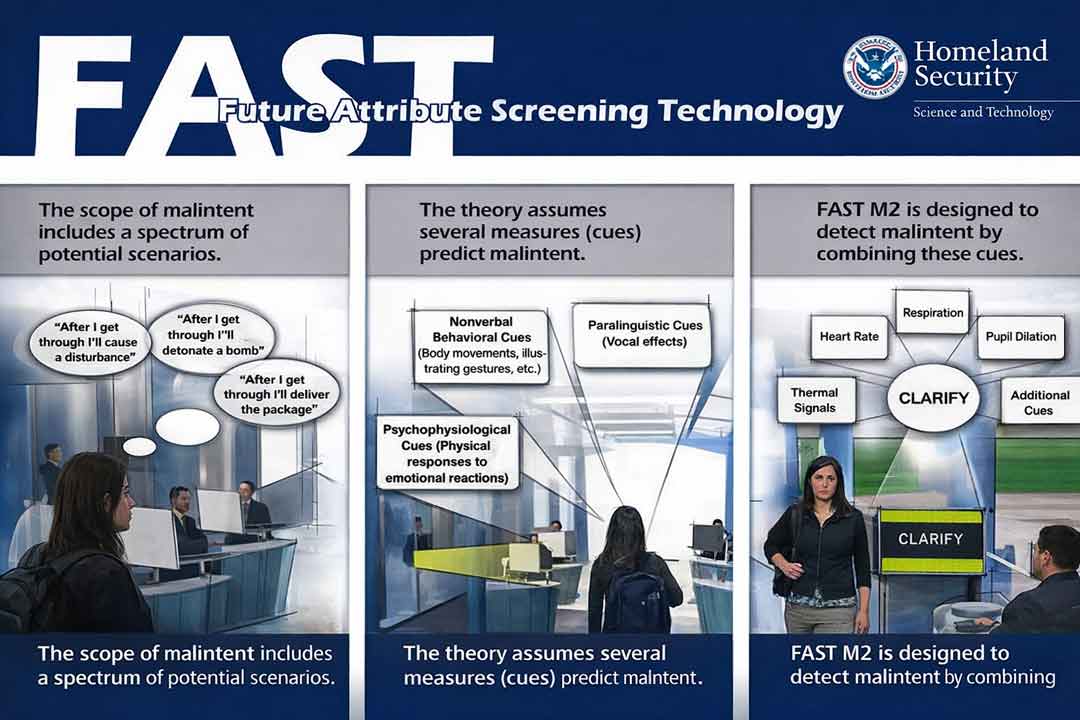
Why behavioral surveillance cannot predict intentions
False positives and decisional risks: the limits of FAST technology and why the State cannot automate the reading of human intentions.
The Distinction that Organizes All Analysis
The starting point of applied behavior analysis is not interpretation, but observation. Even so, most errors occur when these two operations are blurred. An observer perceives a signal and, almost simultaneously, assigns meaning to it. This rapid transition creates a sense of understanding but rarely produces a quality reading.
Perception involves recording observable changes in behavior: facial contractions, postural variations, changes in interaction pace. Interpretation involves explaining these changes, assigning causes, internal states, or intentions. In daily practice, this difference is lost, and intuition takes the place of method.
In this tab, applied behavior analysis appears as an exercise in containment. The more relevant the interaction, the greater the delay should be between perceiving and concluding. It is not about observing less, but about sustaining observation for longer before deciding what it means.
2 - The Face as an Ambiguous Signal
The Face as an Ambiguous Signal — TAB 2
Limits of Facial Reading in Applied Behavior Analysis
What the Face Shows — and What It Doesn’t
- The face reacts, it doesn’t explain
- Emotions are not visible
- Activation does not equal intent
- Baseline limits inferences
- Expressions easily deceive
Why Facial Reading Requires Caution
Facial expressions are often treated as direct evidence of internal emotional states. This assumption supports a large part of the mythology surrounding body language. Applied behavior analysis starts from another premise: the face presents signals that are partial, contextual, and often ambiguous.
What is observed are patterns of muscle activation, often automatic, rapid, and incomplete. These patterns indicate that something has occurred, but rarely indicate what has occurred. Without comparison to a person’s baseline behavior and without considering the situation, the reading becomes speculative.
In this tab, the reader is invited to abandon the expectation of emotional transparency. Applied behavior analysis works with revisable hypotheses, not with visual certainties. The face informs, but it also deludes.
3 - The Body Confirms or Contradicts
The Body Confirms or Contradicts — TAB 3
When Behavior Must Be Read as a Whole
Elements That Rarely Appear in Isolation
- The face does not act alone
- Gestures regulate interaction
- Posture sustains or breaks signals
- Body rhythm matters
- Behavior is a system
Integrated Reading of Interaction
No facial reading stands alone. Applied behavior analysis views human behavior as an integrated system, where posture, gestures, body orientation, and interaction dynamics are in continuous dialogue.
A smile can coexist with body retraction. A neutral expression can accompany evident postural tension. These misalignments only gain meaning when the observer abandons fragmented reading and begins to observe the whole.
This tab shifts focus from a single signal to behavior in flow. Behavior is not a set of fixed codes but a process that adjusts to the other person and the situation. Applied behavior analysis gains precision when the observer starts to read coherence and incoherence over time.
4 - The Weight of Context
The Weight of Context — TAB 4
Why Ignoring the Situation Distorts Analysis
Variables That Change the Meaning of a Signal
- Same behavior, different meanings
- Situation shapes reactions
- Stress alters patterns
- Social roles limit expression
- Ignoring context amplifies error
When Context Stops Being the Background
Human behavior does not occur in a vacuum. Yet, context is often treated as a secondary detail. Applied behavior analysis starts from the recognition that situation, social role, power asymmetry, and stress levels profoundly shape how signals appear.
Principles like equifinality and multifinality show that there is no fixed correspondence between cause and behavior. The same signal can emerge for different reasons, and the same condition can generate different responses.
This tab functions as an interpretive brake. The more relevant the decision, the greater the caution in extrapolating meanings. Applied behavior analysis does not seek to see beyond context, but to understand how context restricts what can be inferred.
5 - Training the Gaze as a Process
Training the Gaze as a Process — TAB 5
Why Method Matters More Than Knowledge
What Really Changes Perception?
- Information does not change the gaze
- Perception adjusts slowly
- Error guides learning
- Comparison is essential
- Method sustains reading
From Understanding to Perceptual Literacy
Applied behavior analysis is not consolidated by accumulating concepts. It depends on oriented perceptual training, systematic comparison, and constant revision of one’s own mistakes.
Understanding limits is not enough. Without deliberate practice, an observer tends to repeat the same mistakes, only with a more sophisticated vocabulary. In this tab, the focus is on observational learning, perceptual tests, and progressive adjustments of the gaze.
Reading improves when the observer starts to perceive more before interpreting. This process is slow, cumulative, and requires method. Therefore, this pillar offers no shortcuts. It offers structure.
Click the tabs
Navigate the tabs to perform the Case Study
Protocols
Practical Protocol for Behavioral Reading
Applied behavior analysis follows five stages: identifying observable signals, prioritizing relevant patterns, contextualizing the interaction, interpreting via hypotheses, and recognizing inferential limits. The goal is to reduce errors in reading people and guide real-world decisions.
A process to analyze human interactions with precision, without falling into intuition or guesswork.
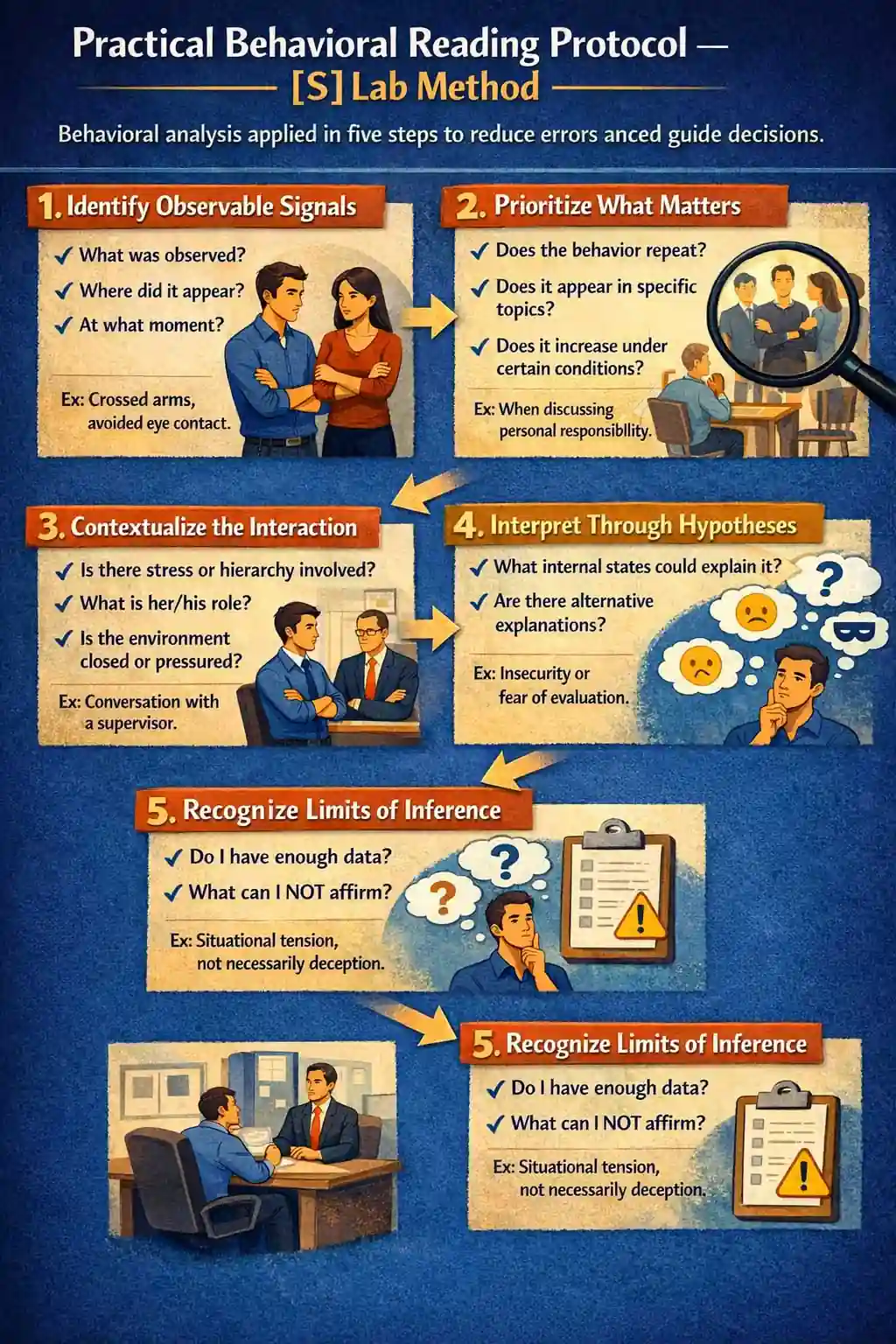
1 — Identify Observable Signals
The first step is not understanding.
It is recording what changed in the behavior.
Ask:
✔ What exactly was observed?
✔ Where did it appear (face, posture, gesture, pace)?
✔ At what moment of the interaction?
Example:
After a certain question, the person crossed their arms, looked away, and became more silent.
2 — Prioritize What Really Matters
Not every signal is relevant.
Here you separate noise from significant patterns.
Ask:
✔ Does this behavior repeat?
✔ Does it emerge during specific topics?
✔ Does it increase under certain conditions?
Example:
The behavior appears whenever the subject involves personal responsibility.
3 — Contextualize the Interaction
Before interpreting, limit the field of possibilities.
Ask:
✔ Is there stress, pressure, hierarchy, or social exposure?
✔ What is the person’s role in the situation?
✔ Does the environment favor withdrawal or openness?
Example:
Conversation with a hierarchical superior → higher behavioral tension.
4 — Interpret via Hypotheses (Not via Certainties)
Now the analysis emerges.
Ask:
✔ What internal states might explain the pattern?
✔ What alternatives also explain the same signal?
Example:
Discomfort, insecurity, fear of evaluation, internal conflict.
5 — Recognize Inferential Limits
Every reading has boundaries.
Ask:
✔ Do I have enough data?
✔ What can I still not affirm?
Example:
It is not possible to conclude deception — only situational tension.
The Real Methodological Gain
You stop:
❌ reacting by intuition
❌ relying on a single signal
❌ interpreting out of context
And you start to:
✔ reduce error
✔ make more precise decisions
✔ understand complex interactions
Case Study
🎬 Vignette — A daily interaction that seems simple (but isn’t)
During a team meeting, a manager directly asks an analyst if a project delay was due to a planning failure.
While listening to the question, the analyst maintains a smile for a few seconds, but soon looks away, crosses her arms, and responds in a lower tone:
“Actually, there were some external factors that made progress difficult.”
Throughout the conversation, whenever the topic of responsibility for the delay returns, she starts shifting in her chair, avoids prolonged eye contact, and ends sentences quickly.
For an outside observer, the immediate reading arises almost automatically:
“She is lying.”
“She is hiding something.”
“She is uncomfortable because she messed up.”
But this conclusion occurs before any structured behavior analysis.
This is exactly where interpretive error usually happens.
Step-by-Step Explanation
🔍 Practical Application of Applied Behavior Analysis — Case Study
🎬 Observed Situation (Summary)
During a meeting, when questioned about a project delay, the analyst:
- maintains a smile for moments
- looks away
- crosses her arms
- lowers her voice volume
- accelerates the closing of answers
Whenever the theme of responsibility returns, these behaviors reappear.
🧠 Step 1 — Identify Observable Signals
Nothing is explained yet. It’s just recorded.
Perceived signals:
✔ gaze aversion
✔ closed posture (crossed arms)
✔ change in voice tone
✔ reduced response time
✔ bodily restlessness
None of this, by itself, means a lie, guilt, or specific emotion.
They are simply observable behavioral changes.
🎯 Step 2 — Prioritize What is Relevant
Now noise is separated from pattern.
What catches attention:
✔ the signals always emerge under the same theme
✔ they reappear throughout the meeting
✔ they do not occur during other subjects
This indicates that:
👉 there is a situational pattern, not an isolated event.
🧭 Step 3 — Contextualize the Interaction
Before interpreting, the field of possibilities is defined.
Relevant context:
• professional evaluation situation
• presence of a hierarchical superior
• possible impact on the analyst’s image
• formal and public environment
It is important to note that the past experience [real, imagined, or induced by gossip] of colleagues with the person influences this scenario decisively.
This context favors tension, self-control, and emotional withdrawal.
🔍 Step 4 — Interpret via Hypotheses
Now possibilities emerge — not certainties.
Plausible hypotheses:
• fear of judgment
• professional insecurity
• discomfort with public accountability
• attempt to preserve image
• tension due to real external factors
Observe:
👉 they all explain the same behavior without involving a lie.
🚧 Step 5 — Recognize the Inferential Limit
With the available data:
❌ it is not possible to affirm deception or concealment
✔ it is only possible to affirm situational discomfort
A responsible reading would be:
“The theme generates behavioral tension and withdrawal, but the exact cause cannot be inferred with certainty.”
✅ Comparison with Intuitive Reading
Common Reading (Intuitive):
“She is lying.”
Reading via Applied Behavior Analysis:
“The theme generates recurring discomfort in an evaluation context; multiple explanations are possible.”
🎯 The Practical Gain
You move from:
❌ rapid judgment
to
✔ more precise understanding
❌ emotional reaction
to
✔ informed decision