
Legislative Architecture Lab
A poorly drafted law is a safe-conduct for organized crime.

At [S] Lab, we map potential failures in the architecture of legislative decision-making to prevent the State from working against itself.
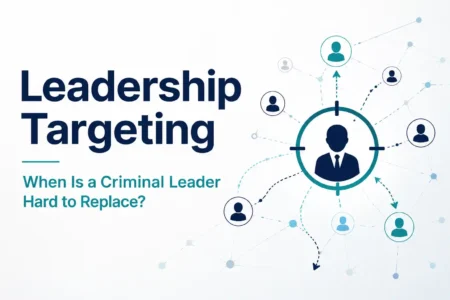
- Leadership Targeting: When Is a Criminal Leader Hard to Replace?
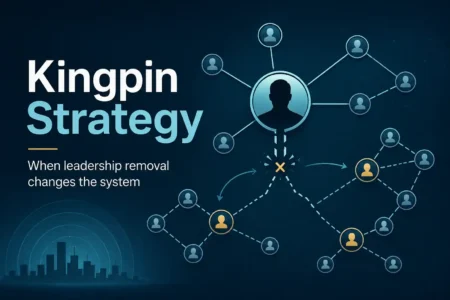
- Kingpin Strategy: When Does Removing a Leader Change the System?
- Countering Adaptive Organized Crime

- Critical Couplings: When One Relationship Can Change the System

- Beyond the Mirage of Clarity: How Instrumentalized Ambiguity Became the Ultimate Power Tool

- The Washington Paradox: PCC, CV, and the U.S. Terrorist Designation

The Lab and Its Purpose
“Taming social complexity is what ensures operational effectiveness and reduced systemic harm. Without that ascendancy, public decision-making produces nothing but futile effort and legal risk for those working on the front line.”
For that reason, the [S] Lab | Legislative Architecture Lab was created as an independent space for research and formulation devoted to the diagnosis and modeling of public decisions in contexts of high institutional complexity.
The lab does not function as an opinion blog or a personal website. It operates as a center for applied intelligence, designed to improve how public institutions decide, cooperate, and respond to complex problems, from urban violence and organized crime to the bottlenecks of federal coordination.
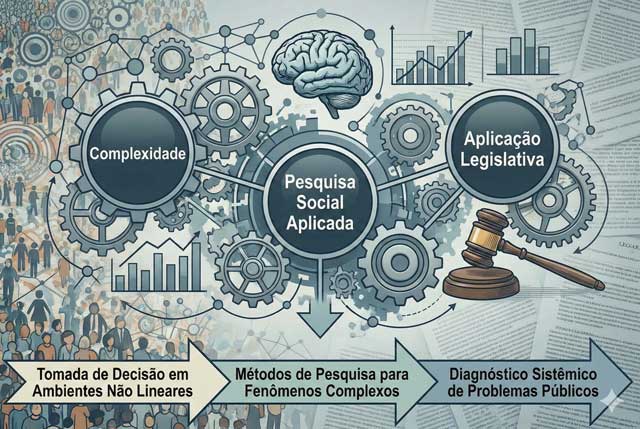
Its central purpose is to integrate behavioral science, the theory of complex systems, and institutional analysis in support of more coherent public policy design.

We are driven by problems widely regarded as unsolvable
Analytical Focus
The lab concentrates its analysis on four interconnected dimensions:
• drivers of public decision-making;
• vulnerabilities and power dynamics within complex institutions;
• the dynamics of violence and organized crime;
• governance and coordination across state systems.
These dimensions make it possible to understand not only the outcomes of public policies, but also the decision-making processes that produce them.
Areas of Work
The lab’s activities are organized around four main fronts:
• development of strategic intelligence parameters within the Legislative Branch;
• assessment of risk in legislative settings;
• organization of applied scientific content for legislation;
• articulation with the project’s broader intellectual ecosystem.
![diagram of the IBRALC ecosystem showing the integration among IBRALC, [S] Lab, IBRALE, and Sergio Senna](https://ibralc.com.br/en/wp-content/uploads/sites/10/2026/03/2026-arquitetura-legislativa-politicas-publicas-congresso-nacional-brasil-s-lab-900x900-2-450x450.webp)
Research Lines
- Legislative architecture: how does the language of law define the limits of its own effectiveness?
- Organized crime as a system: where does the resilience of criminal organizations come from?
- Public decision-making under risk: how can technically grounded choices be made in environments of high uncertainty?
- Institutional complexity: why is integration among security forces so difficult to carry out in practice?
Research Papers
- projects;
- studies;
- articles;
- essays.
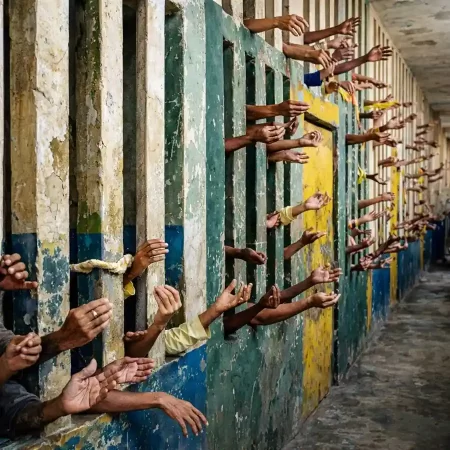
However impossible it may seem, there must be a way forward.
“The [S] Lab was created to strengthen legislative architecture. Our objective is to provide technical clarity on complex systems in order to reduce the futile cost of trial and error and the severe legal risk assumed by those who work in public security.
Dr. Sergio Senna
We do not seek merely to describe problems, but to map and act upon the mechanisms that generate risk for operators, for operations, and for the work as a whole.”
Follow the Tracks

Behavior, Decision and Context
Decisions do not emerge in isolation. Environments shape choice.

Violence, Crime and Complex Systems
Violence emerges when systems fail to coordinate
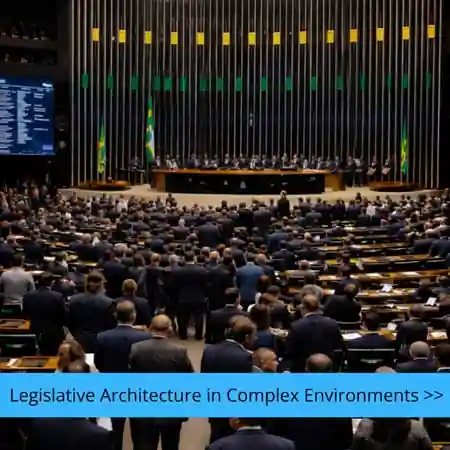
Legislative Architecture and Complexity
Complex problems require sound institutional architecture.