
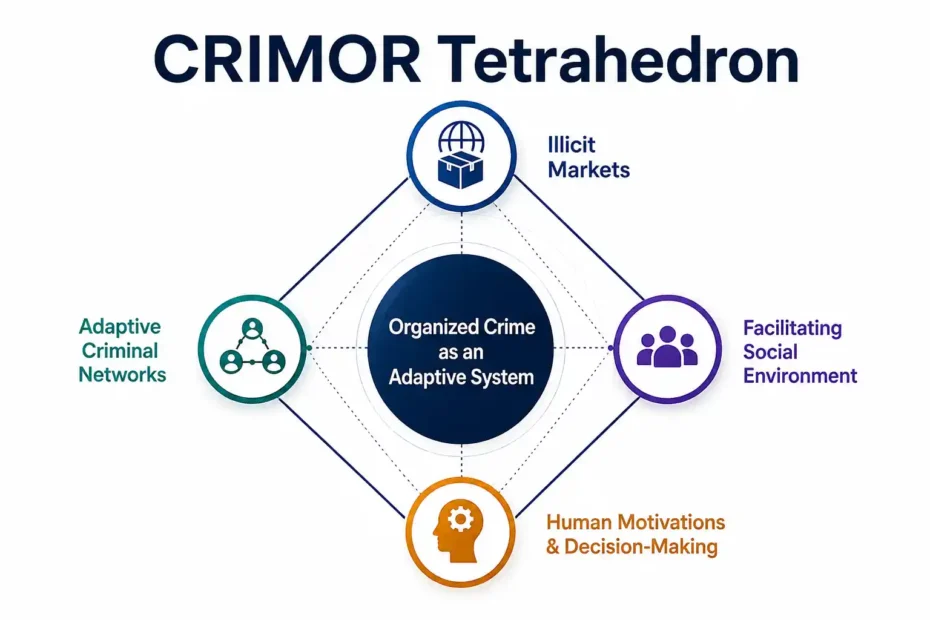
CRIMOR Tetrahedron: Mapping Organized Crime as a System
The CRIMOR Tetrahedron maps organized crime through markets, networks, environments, and human decisions.

The CRIMOR Tetrahedron maps organized crime through markets, networks, environments, and human decisions.
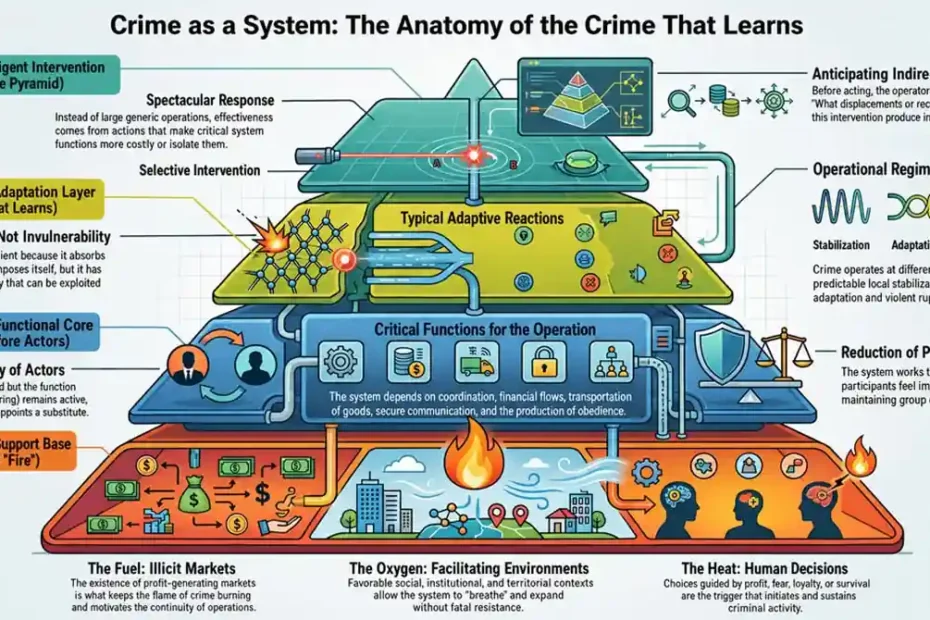
Adaptive organized crime learns from repeated state action. This article explains why public safety needs systemic thinking.
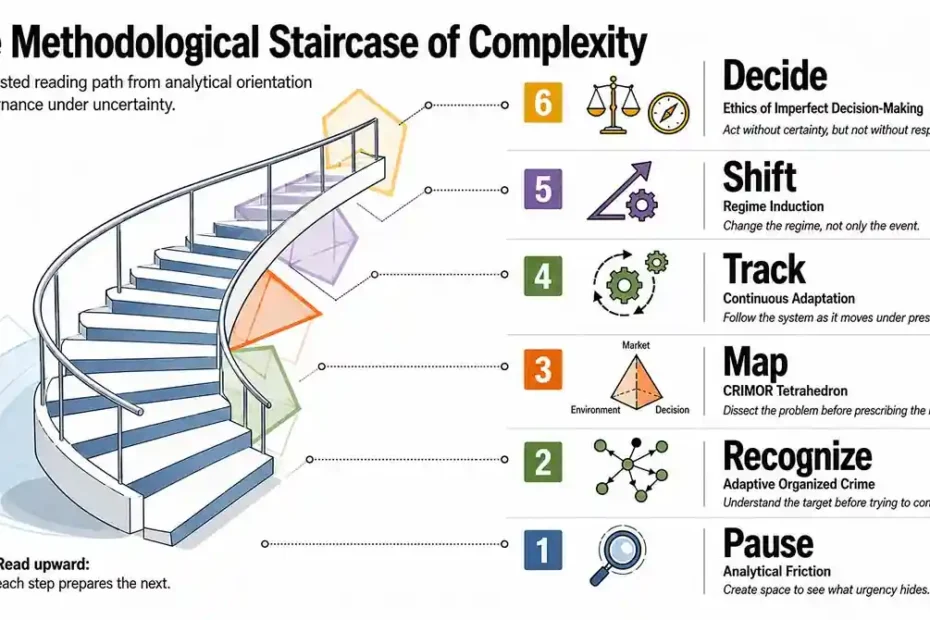
Analytical friction helps public safety leaders pause, test assumptions, and follow a structured path for decisions against adaptive crime.

Criminal adaptive advantage explains why predictable state patterns may strengthen adaptive criminal networks.
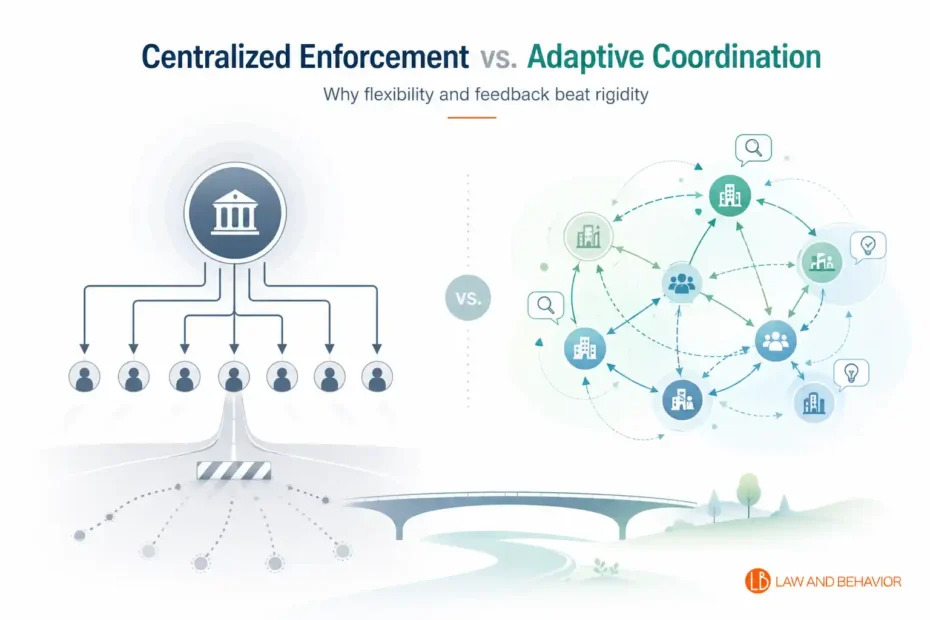
Centralized enforcement works only when command supports coordination, feedback, local intelligence and institutional learning.