
Countering Adaptive Organized Crime
Adaptive organized crime does not stand still under pressure. Explore concepts for criminal adaptation and stronger public safety decisions.

Adaptive organized crime does not stand still under pressure. Explore concepts for criminal adaptation and stronger public safety decisions.

Crime adaptation sensors reveal when public security learns, and when organized crime only moves, hides, replaces, and adapts.

Adaptive organized crime requires leaders to move beyond wiping ice and target the patterns that let criminal systems learn and…
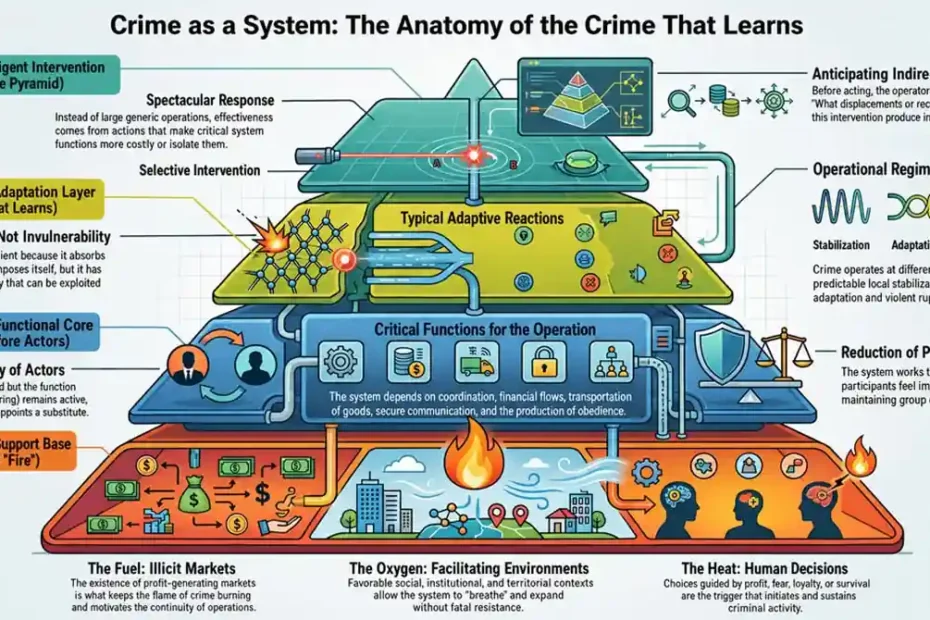
Adaptive organized crime learns from repeated state action. This article explains why public safety needs systemic thinking.

Adaptive crime strategy shows why tactical success can teach organized crime to reorganize unless public safety leaders read the system…

Criminal adaptive advantage explains why predictable state patterns may strengthen adaptive criminal networks.

The Crime That Learns explains crime as a system and shows how public security can target functions, resilience, and operational…
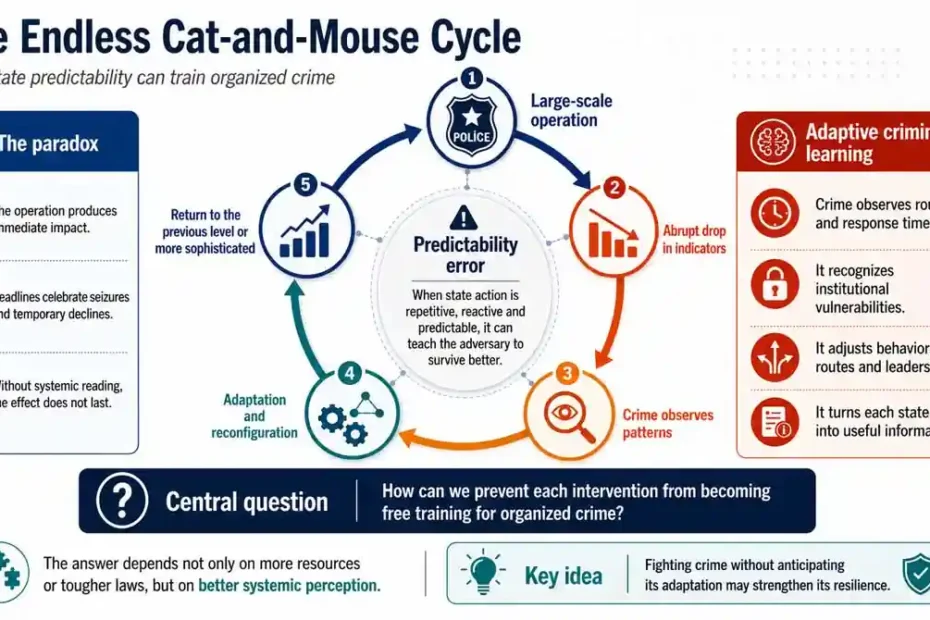
Adaptive criminal learning explains why crime resists, learns from the State, and requires durable public strategies with method.
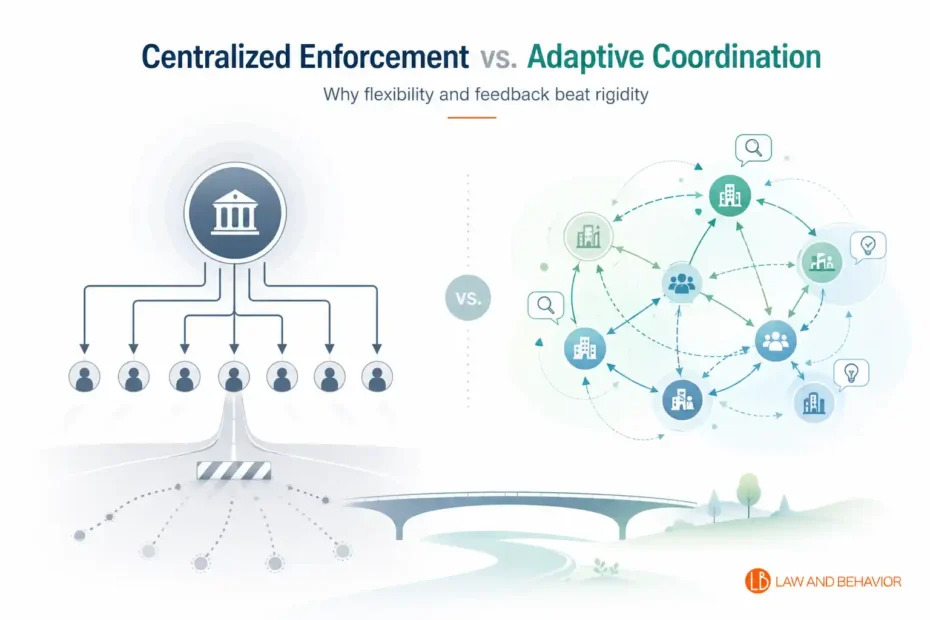
Centralized enforcement works only when command supports coordination, feedback, local intelligence and institutional learning.