

Crime Adaptation Sensors: Why Public Security Must Measure How Crime Learns
Crime adaptation sensors reveal when public security learns, and when organized crime only moves, hides, replaces, and adapts.

Crime adaptation sensors reveal when public security learns, and when organized crime only moves, hides, replaces, and adapts.
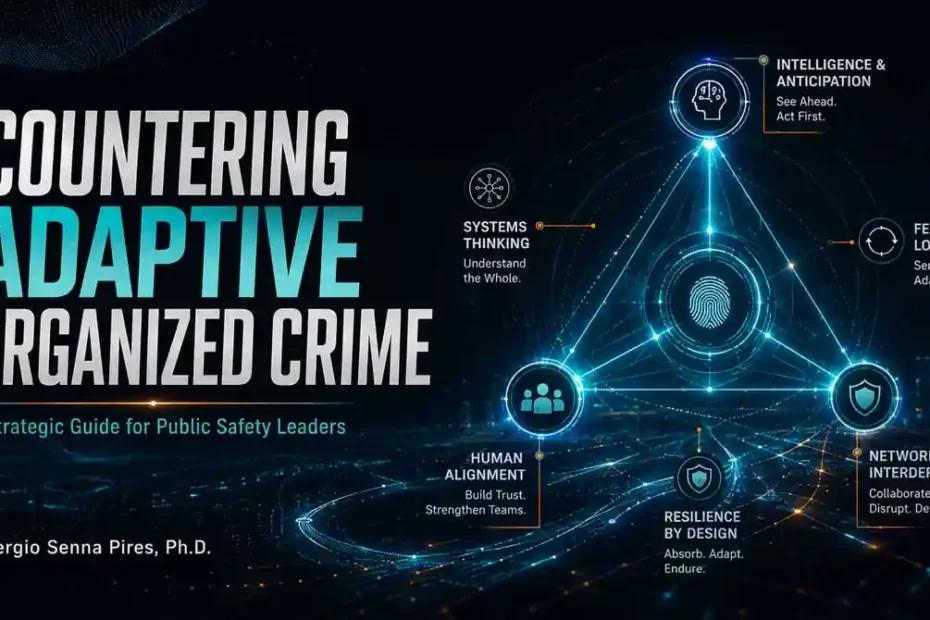
Adaptive organized crime requires leaders to move beyond wiping ice and target the patterns that let criminal systems learn and…
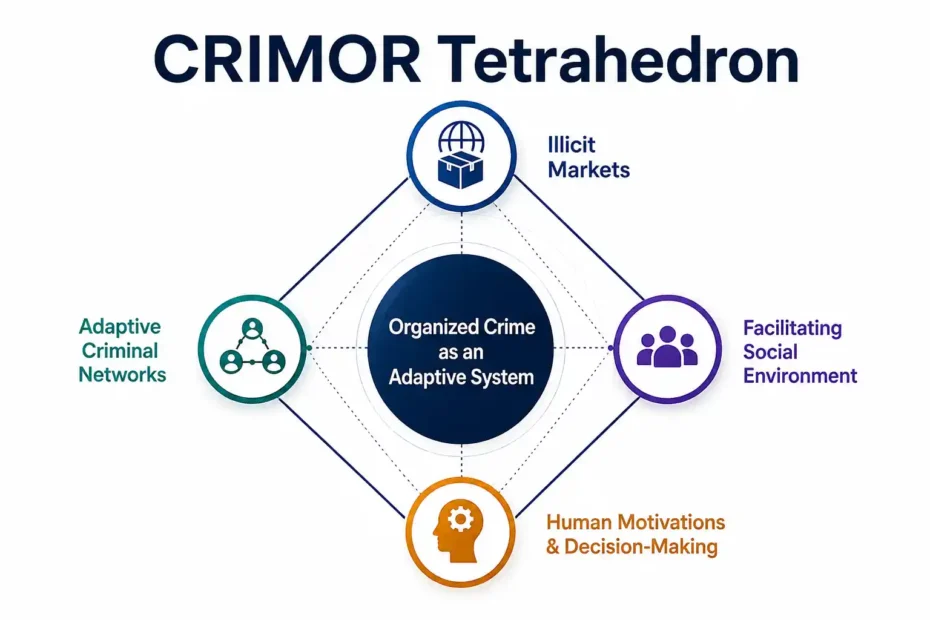
The CRIMOR Tetrahedron maps organized crime through markets, networks, environments, and human decisions.
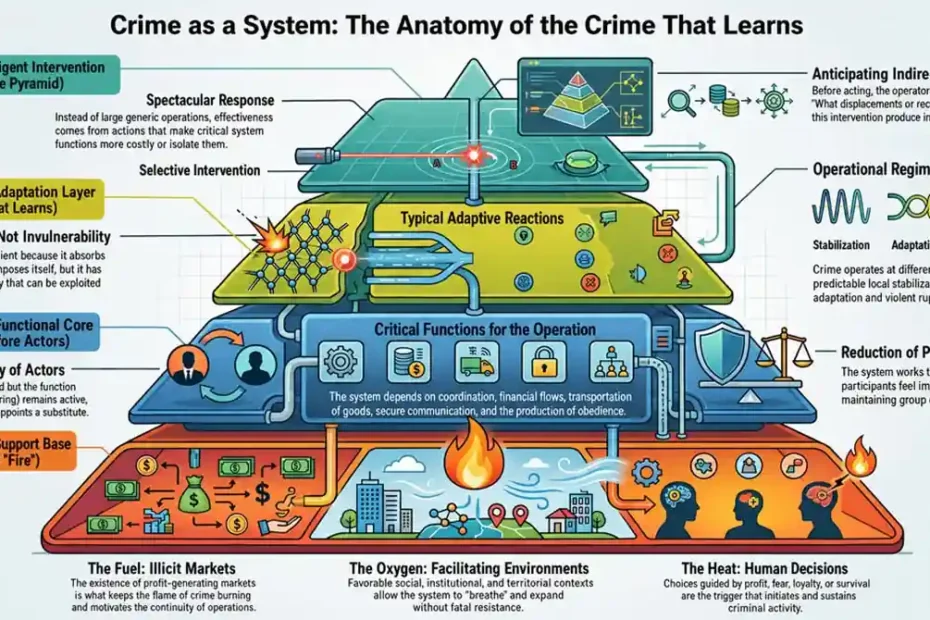
Adaptive organized crime learns from repeated state action. This article explains why public safety needs systemic thinking.
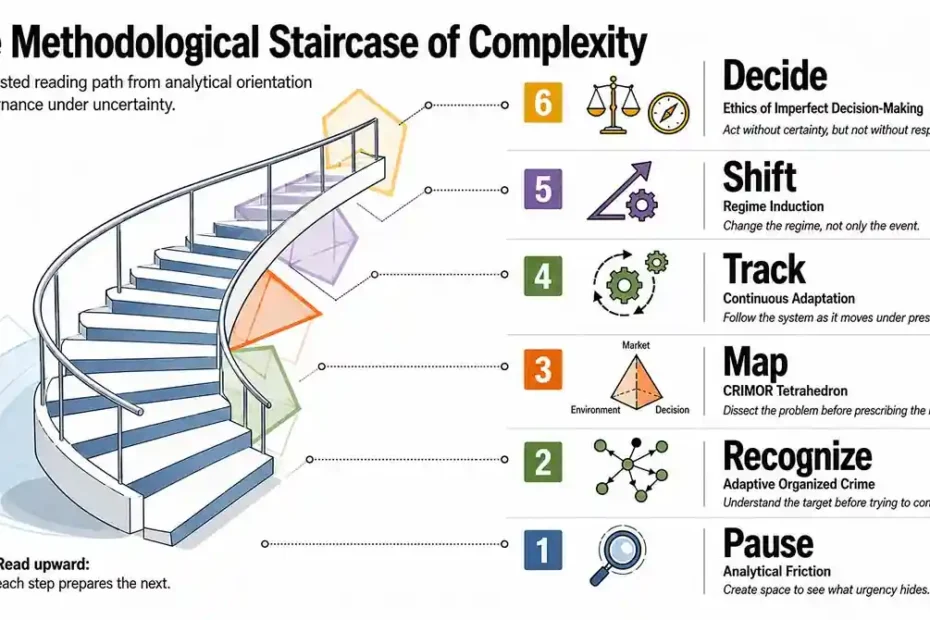
Analytical friction helps public safety leaders pause, test assumptions, and follow a structured path for decisions against adaptive crime.

Criminal adaptive advantage explains why predictable state patterns may strengthen adaptive criminal networks.

The Crime That Learns explains crime as a system and shows how public security can target functions, resilience, and operational…

Criminal learning helps explain why violence persists even when the state expands resources, laws, technologies, and high-impact operations. The problem…
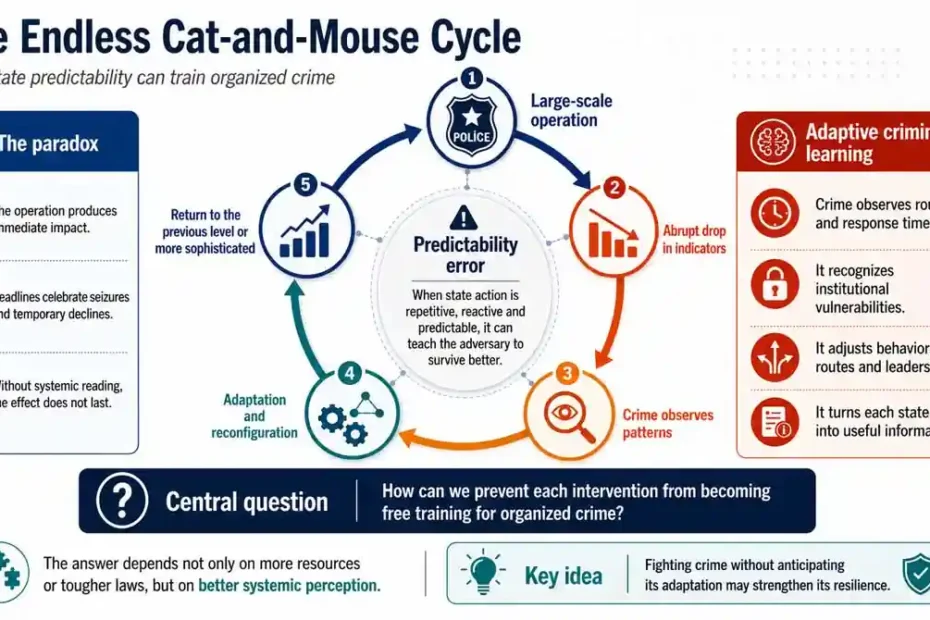
Adaptive criminal learning explains why crime resists, learns from the State, and requires durable public strategies with method.
Adaptive criminal learning explains how predictable state action trains organized crime and how public safety can reduce criminal recomposition over…

Linear policies fail in VUCA worlds. Explore how Complexity Theory and Violence research orients more effective public safety governance.
Linear logic leads to strategic failure. Use Systems Thinking to build resilient governance and master complex adaptive systems with SLAB.

Linear tactics fail against organized crime. Master systemic governance and asymmetry exploitation with the (S) Lab analytical framework.
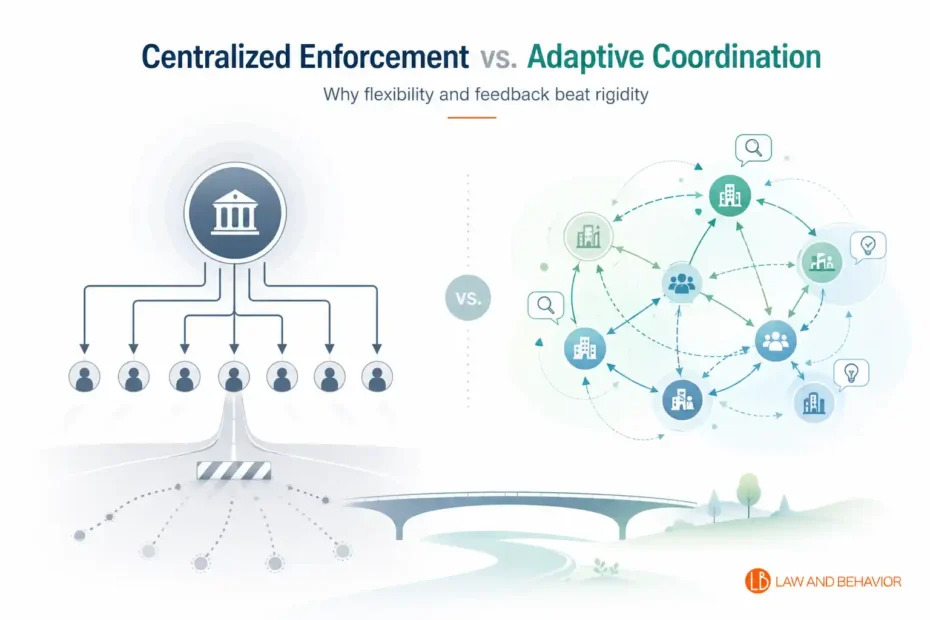
Centralized enforcement works only when command supports coordination, feedback, local intelligence and institutional learning.